Home Energy Independence 2026: Solar + Storage + Smart Grid Guide
The smart home energy market hits $38.6 billion in 2026. Here's the practical guide to building a solar + battery + smart grid ecosystem that actually pays off.
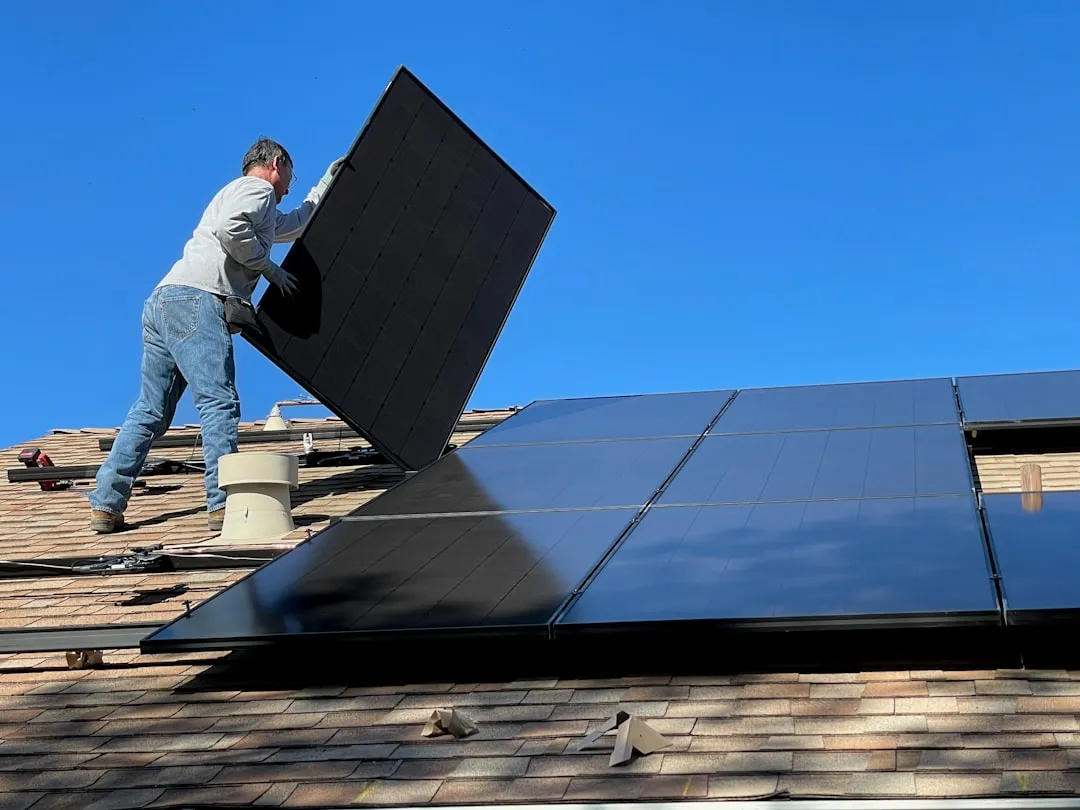
Home energy independence in 2026 isn’t a hippie fantasy—it’s a financial strategy. With solar shingles reaching price parity, sodium-ion batteries cutting storage costs by 40%, and smart panels that automatically arbitrage electricity rates, a full home energy system can pay for itself in under 6 years in high-rate states. Here’s how the three pieces fit together. (This guide is part of our Smart Home Guide 2026 series.)
The Three-Legged Stool
A complete home energy system has three components that must work together:
- Generation (Solar) — Producing electricity from your roof
- Storage (Battery) — Saving excess energy for later use
- Intelligence (Smart Grid Integration) — Automatically optimizing when to use, store, or sell energy
Any one component alone provides partial value. All three together create a system that’s greater than the sum of its parts—reducing bills, providing backup power, and potentially generating income.
Generation: Solar in 2026
Solar Shingles vs. Traditional Panels
2026 is the first year solar shingles make financial sense for new roofs:
| Option | Cost (8kW system) | Best For |
|---|---|---|
| Traditional panels | $16,000-22,000 | Existing roofs in good condition |
| Tesla Solar Roof | $35,000-45,000 (includes roof) | New construction or full re-roof |
| GAF Energy Timberline Solar | $30,000-40,000 (includes roof) | Re-roof with standard shingle look |
The key comparison: if you need a new roof anyway ($15,000-25,000), solar shingles cost only $10,000-20,000 more than a standard re-roof—making the effective solar cost competitive with traditional panels.
If your existing roof has 10+ years of life remaining, traditional panels are still the better value. Don’t tear off a good roof to install solar shingles.
Sizing Your System
The average US home uses 10,500 kWh/year. A properly sized solar system should generate 100-120% of your annual consumption:
- 6-8 kW system — Typical for moderate-use homes (1,500-2,000 sq ft)
- 10-12 kW system — For larger homes, EVs, or heat pumps
- Oversizing by 20% — Recommended to account for battery charging losses and future increased usage (EV charging with a dedicated home charger, heat pump, etc.)
Storage: Batteries in 2026
The Sodium-Ion Disruption
CATL’s commercial sodium-ion cells launched in January 2026, and they’re changing the storage math (see our full sodium-ion vs. lithium battery comparison for a detailed breakdown):
- 40% lower cost than lithium iron phosphate (LFP) batteries
- Zero thermal runaway risk — Cannot catch fire, even when punctured
- Operates at -20°C without capacity loss (lithium loses 20-40% in extreme cold)
- Trade-off: 20-30% lower energy density (larger physical size for same capacity)
For home storage where physical size isn’t a constraint (garage or utility room installation), sodium-ion is the clear winner on cost and safety.
Best Home Batteries (2026)
| Battery | Capacity | Chemistry | Price (Installed) |
|---|---|---|---|
| Tesla Powerwall 3 | 13.5 kWh | LFP | $8,500 |
| Enphase IQ Battery 5P | 5 kWh (modular) | LFP | $7,800 (10 kWh config) |
| Franklin WholePower | 13.6 kWh | LFP | $6,900 |
| CATL EnerOne (Na-Ion) | 14 kWh | Sodium-Ion | $5,200* |
*Estimated; limited installer availability in 2026
Intelligence: Smart Grid Integration
This is the component most homeowners overlook—and the one that makes the biggest financial difference.
What Smart Panels Do
Smart electrical panels like Span Panel ($4,000-6,000 installed) and Savant Power replace your standard breaker box with an intelligent system that:
- Monitors every circuit — Know exactly which appliances consume what energy, in real time
- Automates load-shifting — Run the dishwasher and charge the EV at 2 AM rates ($0.08/kWh), run the house on battery at 2 PM peak rates ($0.35/kWh)
- Manages battery cycling — Automatically charge from solar excess, discharge during peak pricing, and maintain reserve for outages
- Prioritizes during outages — Keep refrigerator, lights, and internet running; shed AC and dryer to extend battery life
The Peak-Shaving Math
In time-of-use rate states, the spread between off-peak and peak electricity can be $0.20-0.35/kWh. A smart panel with battery storage exploiting this spread daily saves $50-150/month—often exceeding the solar savings themselves.
The Complete System Cost
Typical Full System (8kW Solar + 13.5kWh Battery + Smart Panel)
Before Incentives: $25,000-$35,000
Incentives:
- Federal ITC (30%): -$7,500 to -$10,500
- State rebates (varies): -$0 to -$5,000
After Incentives: $14,500-$24,500
Annual Savings:
- Solar generation offset: $1,200-2,400/year
- Peak shaving (TOU states): $600-1,800/year
- Net metering credits: $200-800/year
Payback Period:
- High-rate states (CA, CT, MA, NY): 4-6 years
- Medium-rate states (CO, AZ, TX): 6-8 years
- Low-rate states (WA, LA, WV): 8-12 years
Installation: The Right Order
- Energy audit first — Reduce consumption before generating. Air sealing and insulation have faster payback than solar and make your system smaller/cheaper
- Solar panels/shingles — Generation is the foundation
- Battery storage — Can be added simultaneously or within 1-2 years
- Smart panel — The intelligence layer that maximizes ROI. Can be installed with solar or retroactively
Common Mistakes
- Oversizing the battery without TOU rates — If your utility doesn’t have time-of-use pricing, a battery’s value is limited to backup power. The financial case is weaker
- Ignoring net metering changes — California’s NEM 3.0 reduced net metering credits significantly. Check your utility’s current policy before sizing your system
- Skipping the energy audit — A $500 audit that identifies $2,000 in insulation improvements reduces your solar system size (and cost) permanently
- Choosing the cheapest installer — Solar installations last 25 years. Quality of roof penetrations, wiring, and panel placement matters more than saving $1,000 upfront
The Verdict
A complete solar + storage + smart grid system is the best home investment in 2026 for homeowners in medium-to-high electricity rate areas. The federal 30% tax credit runs through 2032, sodium-ion batteries are dropping costs further, and smart panels turn the system from a break-even proposition into a money-maker.
Start with an energy audit. Get three solar quotes. Factor in your utility’s time-of-use rates and net metering policy. The math works for most homeowners—but the specific numbers depend entirely on your local rates and incentives.
Trying to decide between a battery system and a generator for backup power? Use our Battery vs. Generator Comparison tool to model costs for your specific situation.
This guide is part of our Smart Home Guide 2026 series. Related reading:
- Sodium-Ion vs. Lithium Home Batteries: The 2026 Energy Storage Verdict
- Home Battery vs. Portable Generator: 2026 Showdown
- Your EV Can Power Your Home Now: The Complete V2H Guide
- Best Home EV Chargers 2026
Frequently Asked Questions
Can I go completely off-grid?
Technically yes, but it’s usually not financially optimal. Staying grid-connected lets you sell excess energy, draw power during extended cloudy periods, and maintain access to time-of-use arbitrage. True off-grid requires significantly oversized solar and battery systems (2-3x a grid-connected system) to handle worst-case scenarios. For most suburban homeowners, grid-connected with battery backup provides 95% of the independence at 50% of the cost.
Should I wait for sodium-ion batteries to mature?
If you’re installing in 2026, LFP batteries (Tesla Powerwall, Franklin WholePower) are the proven choice with widespread installer support. Sodium-ion home batteries are available but with limited installer networks. If you’re planning for 2027+, sodium-ion will likely be the default recommendation. Don’t delay solar installation waiting for battery prices—you can always add storage later.
How does an EV change the math?
Significantly. An EV adds 3,000-4,500 kWh/year of consumption. This makes a larger solar system worthwhile and dramatically improves the peak-shaving math (charge the EV overnight at off-peak rates instead of at a public charger). If you have a bidirectional-capable EV, vehicle-to-home charging can turn your car battery into additional home storage. For charger recommendations, see our best home EV chargers guide. If you have or plan to buy an EV, size your solar system 30-40% larger than your current usage suggests.
More in Lifestyle & Home
Best Budgeting Apps 2026: We Tested 12 for 90 Days
We used every major budgeting app for 90 days. YNAB, Monarch, Copilot, and more ranked by what actually changes spending behavior.
Best Mental Health Apps 2026: What Therapists Actually Recommend
We asked 20 therapists which mental health apps they recommend to patients. The honest results, plus what research says works.
The True Cost of Streaming in 2026: Fees You're Probably Missing
Your streaming bill is higher than you think. We break down the hidden fees, forgotten subscriptions, and bundle traps adding $300-600/year to most households.
From Other Topics
How to Ace Interviews After a Career Change in 2026
Career changers fail interviews by apologizing for their background. Scripts and frameworks that turn your non-traditional path into an advantage.
Education & LearningBest Math Apps for Kids 2026: What Actually Builds Number Sense
We tested the top math apps for kids K-8. Which ones build real number sense vs. which ones just drill facts. Organized by age and skill level.
Education & LearningBest Robotics Kits for Kids 2026: Build Real Engineering Skills
We tested 15 robotics kits with kids ages 4-14. Which ones build real engineering skills vs. which are expensive toys. Ranked by age group.