Your EV Can Power Your Home: V2H Bidirectional Charging Guide
V2H charging lets your EV power your house during outages. Which cars support it, what it costs, and whether it's worth it.
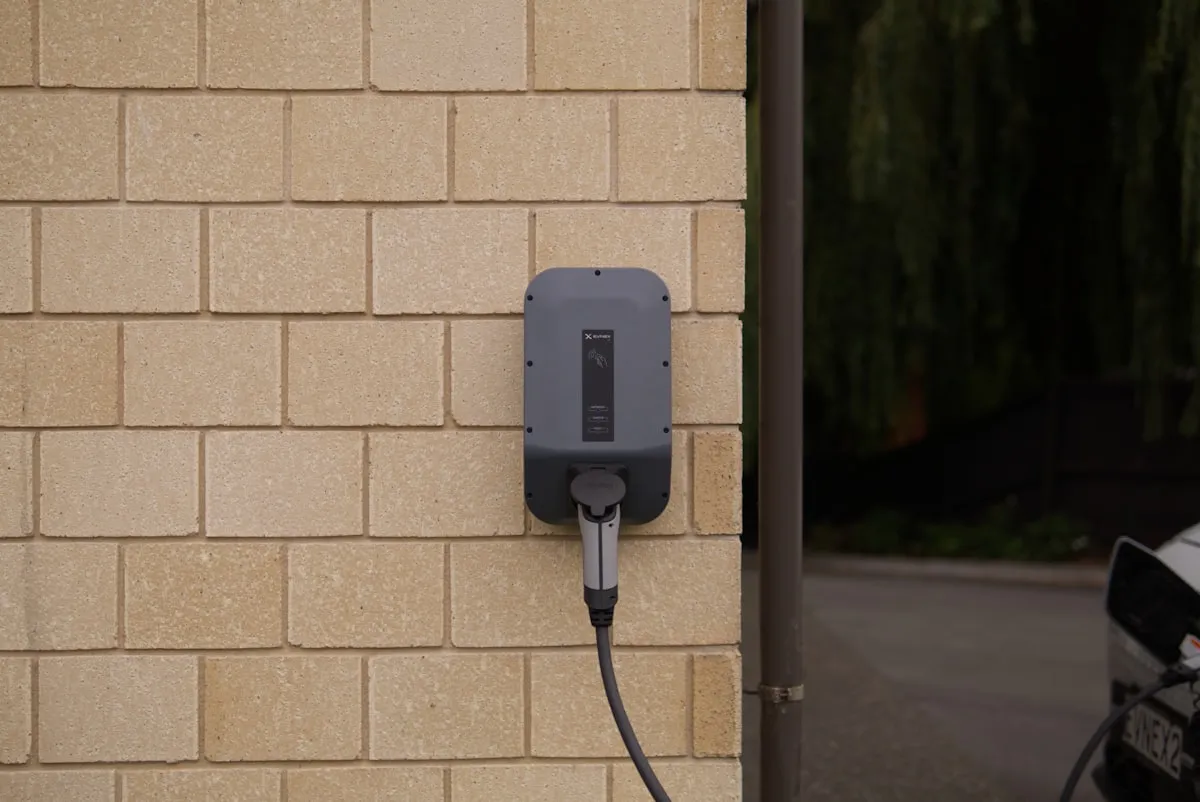
Your electric vehicle has a battery roughly the size of three Tesla Powerwalls sitting in your driveway. Until recently, that energy could only flow one direction: from the grid into your car. That changed. In 2026, vehicle-to-home (V2H) bidirectional charging is finally real, supported by major automakers, and available to buy today. Here is what it actually takes to turn your EV into a home backup battery, what it costs, and whether the math works out. (This guide is part of our Smart Home Guide 2026 series.)
How V2H Actually Works (the Simple Version)
A normal EV charger converts AC power from your home’s grid into DC power to fill your car’s battery. V2H reverses that process. A bidirectional charger pulls DC energy out of your EV’s battery, converts it back to AC, and feeds it into your home’s electrical panel.
The critical piece of hardware is the bidirectional charger (sometimes called an inverter-charger). A standard Level 2 charger cannot do this, no matter what firmware update your automaker pushes—if you are still shopping for a standard charger, see our best home EV chargers guide. For V2H, you need specific hardware that can handle two-way power flow.
The system also requires a transfer switch or gateway that isolates your home from the utility grid when your EV is powering the house. This prevents backfeeding, where electricity from your car leaks onto the public grid and endangers utility workers. When the grid goes down, the gateway disconnects your home, and the EV takes over as a silent, emission-free generator, typically within 30 to 60 seconds.
Most V2H systems deliver 9.6 to 11.5 kW of continuous power. That is enough to run your refrigerator, lights, internet, a few outlets, and even moderate HVAC use. A fully charged EV with a 100 kWh battery could theoretically power an average home for two to three days.
Which EVs Support V2H in 2026
Not every EV can send power back to your house. The vehicle itself needs bidirectional power electronics built into its onboard charger. Here is where things stand right now.
| Vehicle | Battery Size | V2H Power Output | Required Charger | Status |
|---|---|---|---|---|
| Ford F-150 Lightning | 98-131 kWh | 9.6 kW | Ford Charge Station Pro + Sunrun HIS | Available now |
| Tesla Cybertruck | 123 kWh | 11.5 kW | Tesla Powershare Gateway + Universal Wall Connector | Available now |
| Tesla Model Y Performance (2026) | ~82 kWh | 11.5 kW | Tesla Powershare Gateway + Universal Wall Connector | Available now |
| Kia EV9 | 99.8 kWh | Up to 11.5 kW | Wallbox Quasar 2 | Available now |
| GM Ultium vehicles (Silverado EV, Equinox EV, Blazer EV, Lyriq, Escalade IQ) | 85-200 kWh | Up to 10.2 kW | GM Energy PowerShift Charger + V2H Kit | Rolling out across 2026 MY |
| Hyundai Ioniq 9 | 110.3 kWh | Up to 11.5 kW | Wallbox Quasar 2 | Expected mid-2026 |
| Kia EV6 | 77.4 kWh | Up to 11.5 kW | Wallbox Quasar 2 | Expected 2026 |
| Nissan Leaf (2022+) | 40-62 kWh | Up to 6 kW | CHAdeMO bidirectional charger | Available (limited charger options) |
Notable absence: Pre-2026 Tesla Model 3 and standard Model Y vehicles do not support V2H. Tesla has not announced retrofits for older hardware. If you own a 2023 Model 3, you are out of luck for now.
The Big Three V2H Systems, Compared
Ford F-150 Lightning: The Pioneer
Ford was first to market with a real, production V2H system. The setup requires the Ford Charge Station Pro (an 80-amp bidirectional charger, included with extended-range models or ~$1,310 standalone) plus the Sunrun Home Integration System ($3,895 for hardware). Installation runs another $1,000 to $3,500 depending on your electrical panel and location.
Total cost: $5,000 to $8,700 installed.
The system delivers 9.6 kW of backup power. Ford claims a fully charged extended-range Lightning can power an average home for up to three days, or run essential loads like a refrigerator for up to 10 days. Beyond backup, Ford’s Intelligent Power system supports daily peak shaving: charging the truck during cheap off-peak hours and running the home from the truck during expensive peak demand.
The catch: You must use Ford’s specific Charge Station Pro and the Sunrun integration hardware. No third-party alternatives. And installation requires a Sunrun-approved installer, which limits your options and can mean longer wait times.
Tesla Powershare: The Ecosystem Play
Tesla’s approach is characteristically Tesla: proprietary and tightly integrated. The Cybertruck launched with Powershare built in, and the 2026 Model Y Performance added it. V2H requires a Powershare Gateway plus a Universal Wall Connector ($650).
Total cost: approximately $2,500 to $4,500 installed, depending on your home’s electrical setup.
The Cybertruck’s 123 kWh battery delivers up to 11.5 kW, which is the highest continuous V2H output available right now. The system detects outages and switches over within about a minute, with no manual intervention.
Tesla also launched a Powershare Grid Support (V2G) program in Texas in February 2026, letting Cybertruck owners in CenterPoint Energy and Oncor service areas discharge their truck’s battery back to the grid during peak demand and earn bill credits. Think of it as your truck moonlighting as a power plant. California is expected next.
The catch: Powershare only works with Tesla hardware. The much-anticipated Powerwall integration has been delayed again, now expected mid-2026. And only the Cybertruck and 2026 Model Y Performance currently support it. Older Teslas are excluded.
GM Energy: The Fleet Approach
GM committed to making V2H standard across its entire Ultium platform by model year 2026. That includes the Chevrolet Silverado EV, Equinox EV, Blazer EV, Cadillac Lyriq, and Escalade IQ. The GM Energy V2H Bundle, which includes the PowerShift Charger and V2H Enablement Kit, retails for $8,098 before installation.
Total cost: $10,000 to $13,000 installed.
GM’s system manages energy through the GM Energy Cloud software platform, controlling power flow between the vehicle, home, and grid. The breadth of vehicle compatibility is GM’s biggest advantage: by late 2026, nearly every new GM EV will support V2H out of the box.
The catch: The most expensive option by a significant margin. And the rollout has been slower than originally promised. Check with your dealer to confirm your specific model year and trim support V2H before buying the hardware.
The Third-Party Option: Wallbox Quasar 2
Not locked into one automaker? The Wallbox Quasar 2 is the leading third-party bidirectional charger, available now for the Kia EV9 at $6,440 (before installation and taxes). It supports CCS1 charging for any compatible EV and delivers up to 11.5 kW bidirectionally.
Currently available in California, Texas, Florida, New York, Washington, New Jersey, and Illinois, with a nationwide rollout expected soon. More vehicles will be certified for bidirectional use with the Quasar 2 throughout 2026. The Enphase IQ Bidirectional EV Charger is another option to watch, expected at $4,000 to $5,000, but volume production is not slated until Q4 2026.
The federal 30C Alternative Fuel Infrastructure Tax Credit covers 30% of equipment and installation costs (up to $1,000 for residential), which applies to all of these systems.
Real-World Savings: Does the Math Work?
V2H saves money two ways: backup power during outages (avoiding spoiled food, hotel stays, lost productivity) and daily peak shaving on time-of-use electricity rates.
A University of Michigan study published in Nature Energy found V2H could save EV owners 40 to 90 percent of their charging costs over the vehicle’s lifetime, translating to $2,400 to $5,600 in savings. In Texas and California, where time-of-use rate spreads are wide, the savings can be significant enough that owning an EV with V2H actually reduces your household electric bill below what it was before you had an EV.
Here is a simplified example:
- Off-peak electricity rate: $0.08/kWh (overnight)
- Peak electricity rate: $0.35/kWh (afternoon/evening)
- Daily home peak usage displaced: 20 kWh
- Daily savings: 20 x ($0.35 - $0.08) = $5.40/day, or about $160/month
At $160/month in savings, a $6,000 V2H system pays for itself in about three years. But this depends entirely on your utility’s rate structure. If you pay a flat rate for electricity with no time-of-use pricing, the daily savings vanish, and V2H is purely a backup power investment.
The honest take: If you live somewhere with time-of-use rates and experience occasional power outages, V2H is a strong investment. If your electricity rate is flat and your grid is reliable, you are paying $5,000 or more for peace of mind. That is not worthless, but it is not a financial slam dunk either.
Gotchas, Limitations, and What Nobody Tells You
Battery Degradation: The Big Question
Every charge and discharge cycle wears your EV’s battery slightly. Using V2H daily adds cycles that would not otherwise occur. However, research suggests the impact is more nuanced than it seems. Most EV battery degradation is driven by calendar aging (the passage of time), not cycling. For vehicles that sit parked most of the day, V2H cycling adds modest wear.
Some V2H systems are actually designed to keep the battery in a mid-range state of charge that minimizes calendar aging, which can partially offset the cycling wear. The key is to avoid regularly draining to very low states of charge. Most systems let you set a minimum reserve (typically 20 to 30 percent) so the car always has enough range to drive.
Bottom line: Using V2H for occasional backup power has negligible impact on battery life. Daily peak shaving adds some wear, but researchers estimate it reduces total battery lifespan by only a few percentage points over the vehicle’s life. Do not use V2H as an excuse to drain your car to zero every night.
Warranty Concerns
This is where it gets murky. Ford, Tesla, and GM all state that using their official V2H systems with their vehicles does not void the battery warranty. But read the fine print. Some manufacturers explicitly exclude battery degradation caused by third-party bidirectional chargers or unsanctioned V2H setups.
The safe play: Use the manufacturer’s own V2H hardware and software. If you go third-party (like the Wallbox Quasar 2), confirm in writing that your automaker’s warranty covers bidirectional use with that specific charger.
Your Electrical Panel Might Need Upgrading
V2H systems draw significant power and require dedicated high-amperage circuits. If your home has a 100-amp panel (common in homes built before 1990), you may need a panel upgrade to 200 amps before installation. That adds $1,500 to $3,000 to the project. Get an electrician to assess your panel before you commit to buying V2H hardware.
You Cannot Drive a House
This sounds obvious, but: when your EV is powering your home, it is parked. If an outage hits and you also need to drive somewhere, you are choosing between backup power and transportation. Most systems let you set a driving reserve so the car always has enough charge to get you where you need to go, but it reduces the backup runtime.
Utility Interconnection Approvals
Some utilities require approval before you can install V2H, especially if you want V2G (sending power back to the grid). This approval process can take weeks to months. Check with your utility early.
Who Should Get V2H in 2026
Strong yes:
- You already own a V2H-capable EV (F-150 Lightning, Cybertruck, 2026 Model Y Performance, Kia EV9, or a GM Ultium vehicle)
- You live in a region with time-of-use electricity rates
- You experience power outages multiple times per year
- You have solar panels and want to maximize self-consumption
Wait and see:
- Your EV does not yet support V2H but the automaker has announced it is coming
- You pay flat electricity rates and rarely lose power
- You are considering a home battery like a Powerwall anyway (the dedicated battery might be simpler)
Skip it:
- Your EV is not on the supported list and you are not planning to replace it soon
- You rent and cannot modify your electrical panel
- You regularly drive your EV all day and it is rarely parked at home during peak hours
V2H vs. a Dedicated Home Battery
If you already own an EV with V2H capability, the math strongly favors V2H over buying a separate home battery. A Tesla Powerwall 3 costs around $8,500 installed and provides 13.5 kWh of storage (see our sodium-ion vs. lithium battery comparison for alternative options). Your EV already has 60 to 130 kWh of storage sitting in your garage. The V2H hardware to unlock it costs $2,500 to $8,000, and you get five to ten times the energy capacity.
The dedicated battery wins on one point: it is always available. It does not leave the house to go grocery shopping. If you need guaranteed 24/7 backup power, a Powerwall is simpler—our home battery vs. portable generator comparison breaks down that decision in detail. But for most households where the car is parked at home 90 percent of the time, V2H is the better deal.
The Bottom Line
V2H bidirectional charging crossed the line from “cool concept” to “practical technology” in 2026. The hardware exists, the vehicles support it, and the economics make sense in many markets. It is not cheap to set up, and the ecosystem is still fragmented across automakers. But if you already own a compatible EV and live somewhere with time-of-use electricity rates or unreliable grid power, V2H is worth the investment.
Start by checking whether your specific vehicle supports V2H, then call an electrician to assess your panel. The federal tax credit knocks 30% off the top. And if you are shopping for a new EV in 2026, bidirectional charging capability should be on your feature checklist right next to range and charging speed. For standard charger recommendations, see our best home EV chargers guide.
Use our EV Charging Calculator to estimate your charging costs and potential savings with V2H peak shaving.
This guide is part of our Smart Home Guide 2026 series. Related reading:
- Best Home EV Chargers 2026: What to Buy, What to Skip
- Home Battery vs. Portable Generator: 2026 Showdown
- Home Energy Independence 2026: Solar + Storage + Smart Grid Guide
- Sodium-Ion vs. Lithium Home Batteries: The 2026 Verdict
Frequently Asked Questions
Can V2H power my entire house, including air conditioning?
Most V2H systems deliver 9.6 to 11.5 kW, which is enough to run essential loads and moderate AC use. However, a large central HVAC system can draw 5 kW or more by itself, which limits what else you can run simultaneously. Many V2H setups use a load management panel that prioritizes critical circuits (refrigerator, lights, internet, medical equipment) and cycles other loads as needed. You will not be running the pool heater and the oven at the same time during an outage.
Will using V2H void my EV’s battery warranty?
Not if you use the manufacturer’s official V2H hardware and follow their guidelines. Ford, Tesla, and GM all explicitly support V2H use without voiding the battery warranty when using their approved systems. Using third-party bidirectional chargers is where it gets risky. Some automakers have not clarified whether third-party V2H use is covered. Get confirmation in writing before installing anything outside the manufacturer’s ecosystem.
Can I use a regular Level 2 charger for V2H?
No. Standard Level 2 chargers only push power in one direction, from the grid to the car. V2H requires a bidirectional charger with an integrated inverter that can convert DC power from the battery back to AC power for your home. You also need a transfer switch or gateway to safely isolate your home from the grid. A regular charger cannot be upgraded to do this with a software update.
How much can I realistically save per month with V2H peak shaving?
It depends entirely on your utility’s rate structure. In markets with significant time-of-use spreads (like parts of California and Texas), homeowners report saving $80 to $200 per month by charging during off-peak hours and powering the home from the EV during peak hours. If your utility charges a flat rate with no time-of-use pricing, peak shaving saves nothing. Check your utility bill for rate tiers before investing.
What happens if I need to drive during a power outage?
All V2H systems let you set a minimum battery reserve for driving. For example, you can configure the system to stop discharging at 30%, ensuring you always have enough range to get where you need to go. When you unplug and drive away, the home loses backup power until you return and reconnect. This is the main trade-off compared to a dedicated home battery, which stays put regardless.
More in Technology
Home Office Tech Setup 2026: The Gear That Actually Matters
Most home office guides recommend gear you don't need. Here's what actually improves productivity, based on remote work research and our testing.
Privacy & VPN Guide for Families 2026: Protect Your Household
Your family's data is being tracked by 40+ companies. A practical privacy setup guide for parents, plus VPN recommendations that actually work.
Best Smart Kitchen Appliances 2026: What's Worth the Premium
Most smart kitchen gadgets are gimmicks. We tested 20+ and found the 7 that actually save time, reduce waste, or cook better food.
From Other Topics
How to Ace Interviews After a Career Change in 2026
Career changers fail interviews by apologizing for their background. Scripts and frameworks that turn your non-traditional path into an advantage.
Lifestyle & HomeBest Budgeting Apps 2026: We Tested 12 for 90 Days
We used every major budgeting app for 90 days. YNAB, Monarch, Copilot, and more ranked by what actually changes spending behavior.
Education & LearningBest Math Apps for Kids 2026: What Actually Builds Number Sense
We tested the top math apps for kids K-8. Which ones build real number sense vs. which ones just drill facts. Organized by age and skill level.